What it is
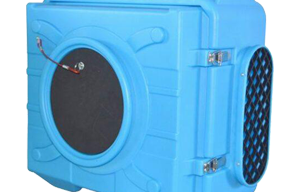
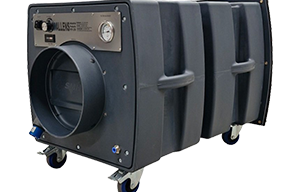
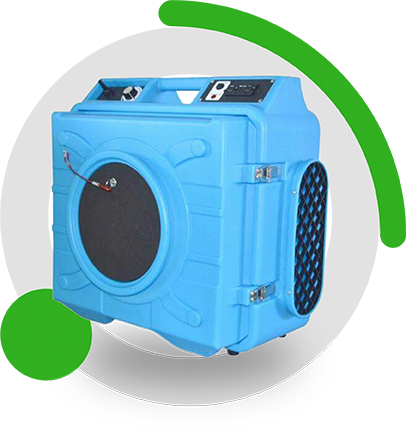
A HEPA Negative Air Machine is a high-powered air filtration unit that draws contaminated air through a series of filters — including a HEPA filter capable of capturing 99.97% of particles as small as 0.3 microns — and exhausts clean, filtered air outside the containment zone. By continuously pulling air out of the contained area, it creates negative pressure — meaning air always flows inward, never outward — so dust, mould spores, and construction particles can never escape into the surrounding building.
How it works on site
The machine is placed inside the containment zone with its exhaust duct directed outside — through a window, into a shaft, or to an external area. It runs continuously throughout the works period. The negative pressure it creates is measured and monitored with a pressure differential gauge mounted on the containment barrier. The moment the machine stops, pressure equalises and the containment zone is no longer safe.
What it is used for
- Dust containment during construction and renovation works in occupied buildings
- ICRA Class II, III, and IV containment in hospitals and healthcare facilities
- Mould remediation — preventing spore dispersal during removal works
- Asbestos-adjacent works requiring controlled negative pressure environments
- Any situation where airborne contaminants must be prevented from entering occupied areas
Who hires it
Main contractors, builders, demolition companies, mould remediation contractors, facilities managers, and any operator required to maintain negative pressure containment on a commercial or healthcare site.
Key benefits
- Protects building occupants from construction dust and harmful airborne particles
- Creates the negative pressure required for ICRA Class III and IV compliance
- HEPA filtration removes 99.97% of particles including mould spores, silica dust, and fine construction debris
- Continuous operation means protection does not stop between working hours
- Required by most hospital and healthcare facility managers before works can commence
Available sizes
500 CFM — suitable for small rooms and single containment zones up to approximately 50 sqm 1,000 CFM — suitable for medium containment zones, corridors, and multi-room areas 2,000 CFM — suitable for large containment zones, open plan areas, and multi-floor applications
Rental includes
Machine, exhaust duct, pre-filter and HEPA filter checked and replaced if required before dispatch, delivery and collection within Auckland, basic setup guidance.
What it is
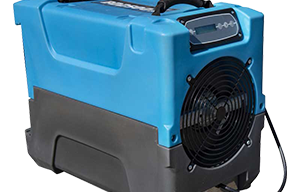
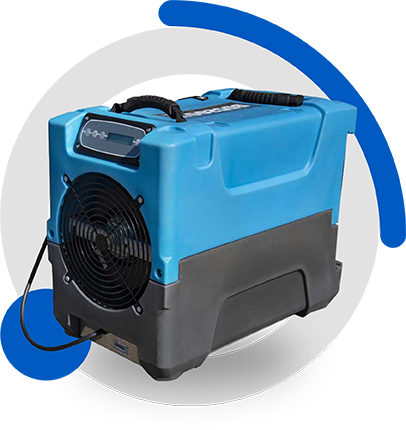
A commercial dehumidifier is a high-capacity moisture extraction unit designed to remove large volumes of water vapour from the air in water-damaged buildings. Unlike a domestic dehumidifier purchased from a hardware store, a commercial unit extracts 50–100 litres of moisture per day — significantly accelerating the drying process and reducing the risk of secondary mould growth.
How it works on site
The dehumidifier draws moist air across refrigerated coils, causing water vapour to condense and drain into a collection tank or continuous drain hose. The dried air is then reheated and returned to the room, where it absorbs more moisture from wet building materials. This cycle runs continuously until moisture readings in all affected materials return to acceptable levels. Bluetooth data loggers placed in the drying zone record temperature and relative humidity throughout the process.
What it is used for
- Structural drying following water damage — burst pipes, roof leaks, appliance overflows, stormwater ingress
- Drying flooring, walls, ceilings, and sub-floor spaces after flooding
- Reducing ambient humidity during mould remediation works
- Post-construction drying of new concrete slabs and wet areas before flooring installation
- Controlling humidity in any environment where excess moisture is causing damage or health concerns
Who hires it
Property managers, homeowners dealing with water damage, builders, remediation contractors, insurance companies arranging emergency drying services, body corporate managers, and facilities teams managing moisture events in commercial buildings.
Key benefits
- Extracts 50–100 litres per day — far beyond what any domestic unit can achieve
- Significantly reduces drying time compared to ventilation alone — saving money on extended remediation
- Prevents secondary mould growth by reducing relative humidity below the threshold mould needs to survive
- Continuous drain option means no tank emptying required on large jobs
- Works in combination with air movers to circulate dry air through building materials more efficiently
What it is
An air mover — also called an axial fan or low-profile floor dryer — is a high-velocity directional fan designed to accelerate evaporation from wet surfaces and push moisture-laden air toward dehumidifiers for extraction. On their own, dehumidifiers extract moisture from the air. Air movers force moisture out of wet building materials and into the air where dehumidifiers can capture it. The two pieces of equipment work as a system — not independently.
How it works on site
Air movers are positioned at a low angle — typically 45 degrees — directed at wet walls, floors, and cavities. The high-velocity airflow breaks the boundary layer of still air sitting against wet surfaces, dramatically increasing the rate at which moisture evaporates out of the material and into the room air. Dehumidifiers then extract that moisture-laden air. In a well-designed drying system, one dehumidifier typically works with two to four air movers depending on the size of the affected area.
What it is used for
- Water damage drying — accelerating evaporation from wet floors, walls, and ceilings
- Carpet and underlay drying following water events
- Drying wall cavities and sub-floor spaces in conjunction with dehumidifiers
- Ventilating enclosed spaces during mould remediation
- Post-flood drying of commercial properties, offices, and residential homes
- Accelerating concrete and screed drying on construction sites
Who hires it
Homeowners, property managers, builders, plumbers managing water damage on client properties, remediation contractors, and facilities teams dealing with water ingress events.
Key benefits
- Dramatically accelerates drying time when used alongside dehumidifiers — can reduce a 14-day drying job to 7 days in favourable conditions
- Low-profile compact design fits under furniture and into confined spaces
- Stackable for transport and storage
- Energy efficient — uses less power than a domestic hairdryer while moving significantly more air
- Reduces total cost of water damage claim by shortening drying duration and reducing the risk of mould developing
What it is
An air scrubber is a portable air filtration unit that continuously draws room air through a multi-stage filtration system — typically a pre-filter, a carbon filter, and a HEPA filter — removing airborne particles, dust, mould spores, chemical vapours, and odours before returning clean air to the space. Unlike a HEPA Negative Air Machine which creates directional negative pressure with an exhaust duct, an air scrubber recirculates and cleans the air within the space itself.
How it works on site
The air scrubber is positioned in the work area or adjacent occupied space. It draws air through its filtration stages continuously, cleaning the room air on a recirculating basis. The carbon filter stage captures chemical vapours and odours — particularly important in fire and smoke damage situations. The HEPA stage captures fine particles including mould spores, construction dust, and soot. In a typical room, an air scrubber recirculates and filters the entire air volume multiple times per hour.
What it is used for
- Fire and smoke damage restoration — removing soot particles and smoke odour compounds from room air
- Mould remediation — capturing airborne mould spores during and after removal works
- General air quality improvement in construction zones and occupied buildings during renovation
- Post-flood odour and air quality management
- Occupied spaces where air quality must be maintained during adjacent construction works
- Any situation where chemical vapours, odours, or fine particles need to be removed from room air
Who hires it
Restoration contractors, property managers dealing with fire or mould events, builders working in occupied spaces, facilities managers, homeowners recovering from fire or flood damage, and any operator requiring improved air quality in a work or occupied area.
Key benefits
- Multi-stage filtration removes particles, spores, chemical vapours, and odours simultaneously
- Does not require an exhaust duct — fully self-contained and can be positioned anywhere in the space
- Carbon filter stage specifically targets smoke odour and VOCs — critical for fire damage situations
- HEPA filtration to 99.97% efficiency at 0.3 microns — captures mould spores and fine soot particles
- Quieter operation than negative air machines — suitable for use in occupied spaces during business hours
- Complements negative air machines in containment setups requiring both pressure control and air cleaning
What it is
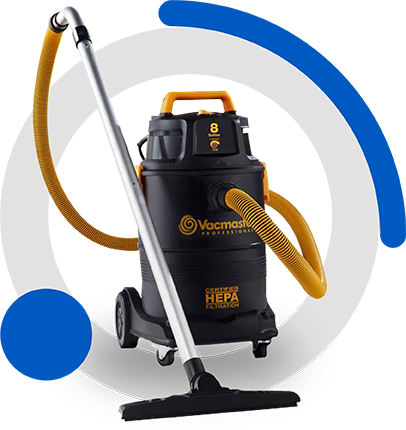
A HEPA vacuum is a professional-grade vacuum cleaner fitted with a sealed HEPA filtration system that captures 99.97% of particles as small as 0.3 microns — including fine construction dust, mould spores, and hazardous fine particles. Standard vacuums and even many commercial-grade shop vacuums exhaust fine particles back into the air through their filtration system. A true HEPA vacuum retains those particles completely within its sealed collection system, meaning what goes in does not come back out.
How it works on site
The HEPA vacuum is used for detailed cleaning of surfaces, floors, and equipment within and adjacent to containment zones — particularly at the end of a project before the air quality clearance test is conducted. It removes settled dust and debris from surfaces without redistributing particles into the air. The sealed filtration system means even the finest particles — including those invisible to the naked eye — are captured and retained for safe disposal.
What it is used for
- Final clean-down of containment zones before air quality clearance testing
- Cleaning HEPA machine pre-filters on site without releasing captured dust
- Detailed surface cleaning in healthcare and sensitive environments where standard vacuums are not permitted
- Mould remediation clean-down — removing settled mould spores from surfaces after treatment
- Construction dust clean-up in occupied buildings — offices, hospitals, schools, aged care
- Cleaning of ductwork surfaces and diffusers adjacent to works areas
- Any situation where fine particles must be removed from surfaces without being redistributed into the air
Who hires it
Main contractors completing ICRA containment works, mould remediation operators, facilities cleaning teams in healthcare settings, builders working in sensitive or occupied environments, and any operator required to conduct a verified clean-down before an air quality test.
Key benefits
- Sealed HEPA system retains 99.97% of captured particles — nothing exhausted back to room air
- Suitable for use in hospitals, aged care, and occupied commercial buildings where standard vacuums are not permitted
- Essential tool for achieving a pass on air quality clearance testing — removes settled particles that would otherwise become airborne during testing
- Multiple attachment heads for floors, surfaces, crevices, and duct openings
- Significantly reduces particle count in the final clearance test compared to jobs cleaned with standard vacuums
What it is
A water extractor — also called a wet vacuum — is a high-capacity machine designed to remove standing water and heavily saturated moisture from floors, carpets, underlay, and hard surfaces as the first step in any water damage response. Before dehumidifiers and air movers can dry a building effectively, the bulk of the water needs to be physically extracted first. Trying to dry a soaking wet carpet with a dehumidifier alone is like trying to dry a swimming pool with a fan. The water extractor removes the bulk water fast so the drying equipment can do its job properly.
How it works on site
The water extractor uses a powerful suction motor to draw water from surfaces through an extraction wand or floor tool directly into a large sealed collection tank. On carpeted areas, the weighted extraction head is pushed slowly across the surface, drawing water up through the carpet pile and underlay in a single pass. On hard floors, the squeegee tool collects and extracts standing water in minutes. Once bulk water is removed the dehumidifiers and air movers are deployed to complete the structural drying process.
What it is used for
- Emergency water extraction following burst pipes, appliance overflows, and roof leaks
- Carpet and underlay water extraction — removing bulk moisture before drying equipment is placed
- Hard floor water removal — tiles, timber, vinyl, and concrete following flooding
- Extracting water from sub-floor cavities and confined spaces
- Removing residual water from containment zones after wet works
- First response to stormwater ingress and flash flooding events in commercial and residential properties
- Clearing water from bathrooms, laundries, and kitchens following appliance failures
Who hires it
Homeowners dealing with sudden water damage events, property managers responding to tenant water damage calls, plumbers attending burst pipe callouts, builders and remediation contractors, body corporate managers dealing with common area flooding, and facilities teams managing water ingress in commercial buildings.
Key benefits
- Removes bulk water in minutes rather than hours — dramatically reducing total water damage and drying time
- Significantly reduces the number of dehumidifiers and drying days required — saving money on the overall job
- Prevents water from spreading further through the building by removing it at the source immediately
- Carpet and underlay extraction can save flooring that would otherwise require full replacement
- Reduces the risk of secondary mould growth by removing standing moisture before the 48-hour mould risk window
- Large capacity collection tank means fewer stops to empty on big jobs
- Works on all floor types — carpet, timber, tiles, vinyl, and concrete